The project
The Manifesto, the concepts the association proposes and the research programme.

The Manifesto
The cultural orientation

The Manifesto Humanism of Attention expresses the cultural orientation of Habeas Mentis. It starts from one consideration: in the digital environment the protection of the person concerns not only data and confidentiality, but also the conditions in which attention, judgements and decisions are formed.
With the expression Humanism of Attention, Habeas Mentis proposes to consider attention as a concrete condition of personal autonomy and of participation in social life. The aim is not to remove the person from every influence, but to promote environments and systems in which influence is recognisable and the person can understand it, refuse it or interrupt it.
The Manifesto indicates a cultural direction, not a scientific conclusion nor the existence of a new right already recognised. The concepts of Psychic Domicile and Cognitive Sovereignty are the instruments with which the association intends to develop this perspective and submit it to legal, scientific and institutional discussion. The motto Libertas per limitem expresses the principle that personal freedom also requires limits on the power to observe, profile and steer behaviour.
Libertas per limitem
Personal freedom also requires limits on the power to observe, profile and steer behaviour.
What we propose
The Psychic Domicile

Psychic Domicile is the name Habeas Mentis proposes for the personal sphere in which attention, judgements, intentions and decisions are formed. The concept arises from the need to ask how this sphere is protected when a digital environment observes behaviour, derives predictions and modifies content or modes of interaction according to the user’s responses.
The Psychic Domicile does not coincide with a right not to be influenced. Every person is influenced by relationships, education, culture and communication. The question concerns forms of steering that operate systematically, opaquely and adaptively, reducing the possibility of recognising the influence, refusing it or interrupting it.
The Psychic Domicile is today a conceptual and legal proposal. It is not an autonomous right already recognised by the legal system. Habeas Mentis is working on its definition and on verifying its relationship with existing protections concerning dignity, personal freedom, private life, psychic integrity, data protection, consumer protection and the regulation of digital systems.
Cognitive Sovereignty

Cognitive Sovereignty is a working concept referring to a person’s ability to maintain an active role in their own attentional and decision-making processes. It concerns the capacity to begin, continue, interrupt or modify an action in a way consistent with intentions the person can recognise as their own.
It does not mean having complete control over one’s thoughts or being independent of every influence. The expression of Cognitive Sovereignty may depend on context, physiological state, relationships and the characteristics of the environment in which a decision is taken.
The scientific definition of the concept is still in progress. Habeas Mentis does not use Cognitive Sovereignty as a diagnosis, as a judgement on the person, or as a quality that can be measured today through an already available score.
Cognitive Sovereignty Index
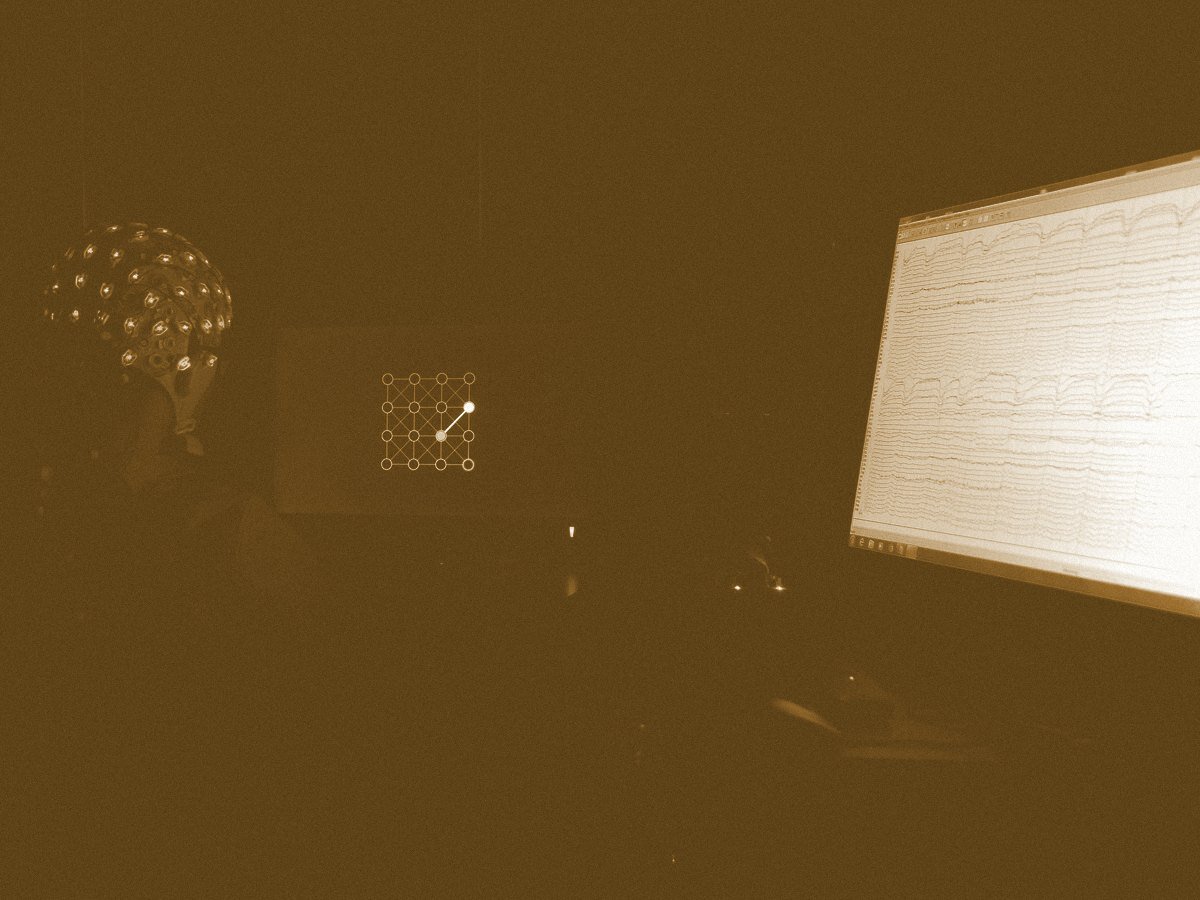
The Cognitive Sovereignty Index is a research instrument that Habeas Mentis intends to develop and submit for validation. At present no validated and usable version of the Index exists.
The aim is not to measure in absolute terms how sovereign a mind is. Any such instrument should help to observe how certain personal and environmental conditions are associated with the possibility of maintaining or recovering control of attention and decision in a defined context.
The structure of the Index, its dimensions and the indicators to be used must still be established through research. No single physiological, behavioural or subjective parameter can be considered on its own a measure of Cognitive Sovereignty.
The Index is not conceived for clinical diagnoses, individual rankings, personnel selection, school assessments, contractual decisions or comparison between athletes.
The regulatory proposal

Habeas Mentis is working on a regulatory proposal on the Psychic Domicile. The aim is to define when the steering exercised by a digital system may become legally relevant, and which obligations may be required of those who design or use systems capable of observing, predicting and influencing behaviour.
The work starts from the protections already present in the Italian and European legal systems. It does not intend to replace them, nor to claim that they are ineffective. It intends to verify whether there are aspects currently treated separately that require a more organic discipline, in particular when profiling, personalisation and persuasive design operate together.
The proposal is being developed and discussed. The contents published on this site describe the aims of the project and the questions Habeas Mentis intends to submit to jurists, researchers, institutions and public decision-makers. They do not describe a law already in force.
The research
The research programme

The research programme of Habeas Mentis concerns the definition of Cognitive Sovereignty and the study of the relationship between the person and persuasive digital environments.
The programme is currently in its conceptual and methodological phase. No empirical studies have yet been completed, no experimental results are available and no validated index exists. The hypotheses described in the project materials must therefore be considered research questions and not scientific conclusions.
The planned work includes a review of the literature, the definition of the construct, the development and validation of any measurement instruments, the study of the characteristics of persuasive environments, and the assessment of the possible legal and regulatory uses of the results.
Any future empirical activity must be carried out through adequate scientific and ethical protocols. The programme does not intend to access the content of thoughts, nor to produce instruments of surveillance or assessment of people.
Sport and neuroathletics

Neuroathletics is an applied line of research currently being designed. The hypothesis is to use the sporting context to study the relationship between digital and attentional load, physiological recovery and the quality of decision under pressure.
No data are yet available demonstrating a specific effect of digital exposure on sporting performance, and no attentional recovery protocol has been validated. These relationships will have to be verified through studies designed with qualified scientific and sporting partners.
Any pilot projects must clearly distinguish research from performance management. Participation must be voluntary and revocable. Individual data must not be used for decisions on selection, deployment, contract renewal, transfer or the economic valuation of the athlete.
The Psychic Domicile of minors

Habeas Mentis devotes a specific area to minors because childhood and adolescence are phases in which attentional, emotional and decision-making capacities are still developing.
The work examines the protections already provided for minors in the digital environment and assesses whether persuasive architectures should also be considered in relation to developmental conditions, and not only to the protection of data and content.
Habeas Mentis does not claim that every digital exposure produces harm, nor that irreversible consequences have been demonstrated in general. It proposes a proportionate application of the precautionary principle and the development of age-appropriate environments that are transparent and easy to interrupt.
This line too is being developed and will have to be built with legal, paediatric, psychological and educational expertise.